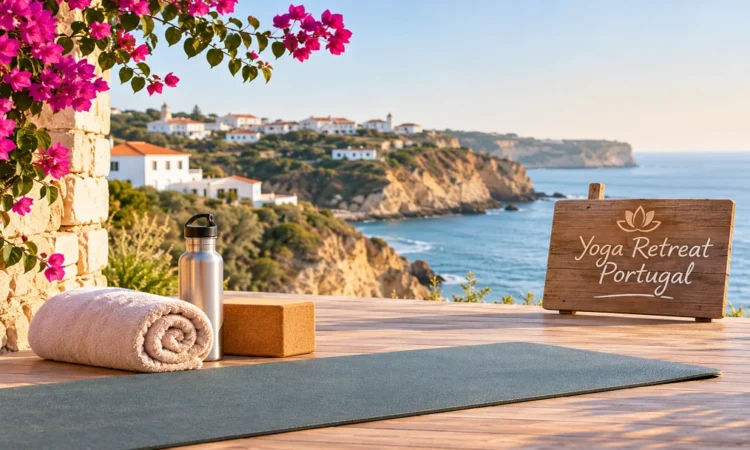
A yoga retreat can be a memorable way to explore Portugal and make time for yourself. But the experience depends on more than the class schedule. The setting, pace, food, accommodation and time between sessions all shape how your week feels.
After hosting retreats in central Portugal since 2008, I’ve learned that the details matter. Here are some things to consider before you book, so you can choose a retreat that suits both the break you want and the way you like to travel.
Start with the kind of break you want
Before comparing destinations or yoga styles, think about what you want from the trip. Are you hoping for a busy week of workshops and sightseeing, or a quieter stay with time to walk, read and rest? Perhaps you want to deepen a regular practice, try something new, or simply spend a few days away from your usual routine.
There’s no single right answer. The key is to choose a retreat whose rhythm matches your needs. Look at the full daily schedule, including early starts, free afternoons and evening activities. A programme with several classes a day may suit someone who wants an immersive experience; another traveller may prefer a lighter schedule with plenty of unplanned time.
It can help to picture an ordinary day at the retreat, rather than focusing only on the highlights. When do classes happen? How much time is there to eat, shower and relax? Are excursions optional, or are they a central part of the programme? These details can tell you whether the week will feel nourishing or over-scheduled.
Choose a setting that supports the pace
Portugal offers very different retreat settings, from coastal towns to rural inland areas. Consider what you want around you when class is over. If you picture quiet walks, open views and time outdoors, a countryside location may suit you. If restaurants, beaches and local attractions are priorities, look at how close the retreat is to them and whether you’ll need a car.
A rural retreat can offer a welcome change of pace, but it may also mean fewer shops and services nearby. Find out whether the venue has places to relax outdoors, walking routes or access to swimming. Ask whether you can explore independently or whether you’ll need to join organised outings. That will help you decide whether the setting suits your idea of a holiday.
Check the practical travel arrangements, too. Ask how to reach the retreat from the nearest airport or station, whether transfers are available, and how much independent travel you’ll need to organise. A beautiful remote location can be a welcome change of pace, but it helps to know what getting there involves. If you’re arriving late or travelling with luggage, check the timing and meeting point for any transfer before you book flights.
Look beyond the name of the yoga style
Retreat descriptions often list styles such as Yin Yoga Training vinyasa, yin, hatha or ashtanga. These names are useful starting points, but they don’t tell you everything about how a week will feel. Teachers may approach the same style in different ways, and a retreat may combine several practices.
Read the programme and ask the organiser what a typical day includes. How long are the sessions? Are meditation or other practices included? Is there support for people who are new to a particular style? If you have an injury or specific needs, contact the retreat directly before booking and ask whether the programme is suitable for you.
It’s also useful to ask what “all levels welcome” means in practice. Will there be options to adapt postures? Can participants rest when they need to? Is the teacher available to answer questions? A welcoming retreat should make its expectations clear and explain how participants can adapt their practice.
You don’t necessarily need to be highly experienced to attend a retreat. Some people arrive with a regular practice; others are returning after a break or trying yoga for the first time. Be honest with yourself and the organiser about your experience and what you’re hoping to do. That conversation can help you choose a week that feels supportive.
Check what the price includes
Retreat prices can be difficult to compare if one includes accommodation and meals while another charges for them separately. Check what is covered: classes, lodging, meals, local transfers, equipment and any scheduled activities. Ask about optional extras and the payment and cancellation terms before committing.
Accommodation is part of the retreat experience. Look at the available room types, bathroom arrangements, shared spaces and any relevant facilities such as Wi-Fi. If you’re travelling alone, ask whether single rooms are available or whether room sharing is an option. If quiet or privacy is important to you, find out what the different room choices offer before you decide.
Also check the booking details carefully. When is the balance due? What happens if your plans change? Are deposits refundable or transferable? Knowing the answers early can prevent confusion later and help you compare options fairly.
Ask about the food and free time
Meals and breaks can have a big effect on the rhythm of your stay. Check whether meals are included, what kind of food is served, and how the organiser handles dietary requirements. If you have allergies or other needs, raise them before booking so you can understand what is possible.
Ask how meals fit into the daily programme, too. Are they shared at set times, or is there flexibility? Is there drinking water and tea available between meals? These practical details help you imagine the day and decide whether the routine works for you.
Also make sure the schedule leaves space to enjoy the place you’ve travelled to. Depending on the location and season, that might mean a walk, a swim, a visit to a nearby village or simply an afternoon with no plans. A retreat doesn’t need to fill every hour to feel worthwhile.
Free time is not wasted time. It gives you room to notice the landscape, chat with other guests, or take a break from group activities. If you like exploring, ask what is nearby and how you can get there. If you prefer to stay at the retreat, find out whether there are comfortable places to read or rest.
Consider the season and what to pack
The season can change the feel of a retreat. Think about the temperatures you’re comfortable with, how much time you hope to spend outdoors and whether you prefer quieter travel periods. Ask the organiser what the weather is typically like at that time of year and which activities depend on conditions.
Before travelling, check the retreat’s packing suggestions. You may need comfortable layers for early mornings and evenings, walking shoes, swimwear or a light rain jacket, depending on the season and programme. Find out whether yoga mats and props are provided. Packing for the actual schedule is more useful than bringing equipment you may not need.
Choose the retreat that feels right for you
A little research can help you find a retreat that fits your travel style, experience and budget. Read recent guest feedback, review the schedule and ask the organiser any questions that matter to you. Pay attention to the answers: clear, thoughtful communication before you arrive can help you feel more at ease when you get there.
The best retreat is not necessarily the one with the longest programme or the most activities. It’s the one whose setting, teaching and pace make sense for the kind of break you want. Give yourself time to compare the details, then choose the place that feels like a good fit.
About the author
Peter Askew is a yoga teacher and co-founder of Yoga Evolution Retreats, which has hosted yoga retreats in central Portugal since 2008.